Start with the console, because it is the clearest signal and the least important one. In late September a developer published a PlayStation 5 jailbreak that works on firmware up to 13.60, covering nearly every console that had not taken Sony's September update. Mashable could find no confirmation that its authors used AI. What it did find was everything built on top of it: "hundreds of vibe-coded, AI-decompiled emulators and games" in a couple of weeks, most of them crediting Claude Opus 5.5, including an app that runs PlayStation 2 discs on the jailbroken console and went from a buggy first release to a second version with frame generation in about two weeks.
The same fortnight a developer pointed an agent at GoldHEN, a PS4 homebrew tool that volunteers had maintained for about five years, published a copy without asking, and told Kotaku he did not care what the team thought. By October 21 the list at Reversed with AI stood at 143 games decompiled, recompiled, ported or modded with Claude and Codex: 50 working, 90 partial. GoldenEye 007 reached PC in 51 days with two agents. Pilotwings 64 took six days.
Then it left the games. A single developer released ArtCraft, a free, open-source suite copying Photoshop, Illustrator, Premiere and Lightroom, written in Rust with Claude Opus 5.5. It is early alpha and, in Vice's words, "incredibly glitchy." Testers also said the tools "feel like their Adobe counterparts." Adobe has said nothing on the record. And on GitHub a project called Reverse Engineer Anything, an MCP server that lets a coding agent drive Ghidra, IDA or Hopper against any binary, passed 355,000 stars in two weeks. Its pitch: "See a feature in an app that you want in your own product? Ask your agent to investigate it with REA."
I wrote on Wednesday about what this does to a pricing page. This piece is about the larger thing underneath it: what was actually protecting software, what the law says now that it is gone, and whether anything can be secured when a subscription reads any binary.
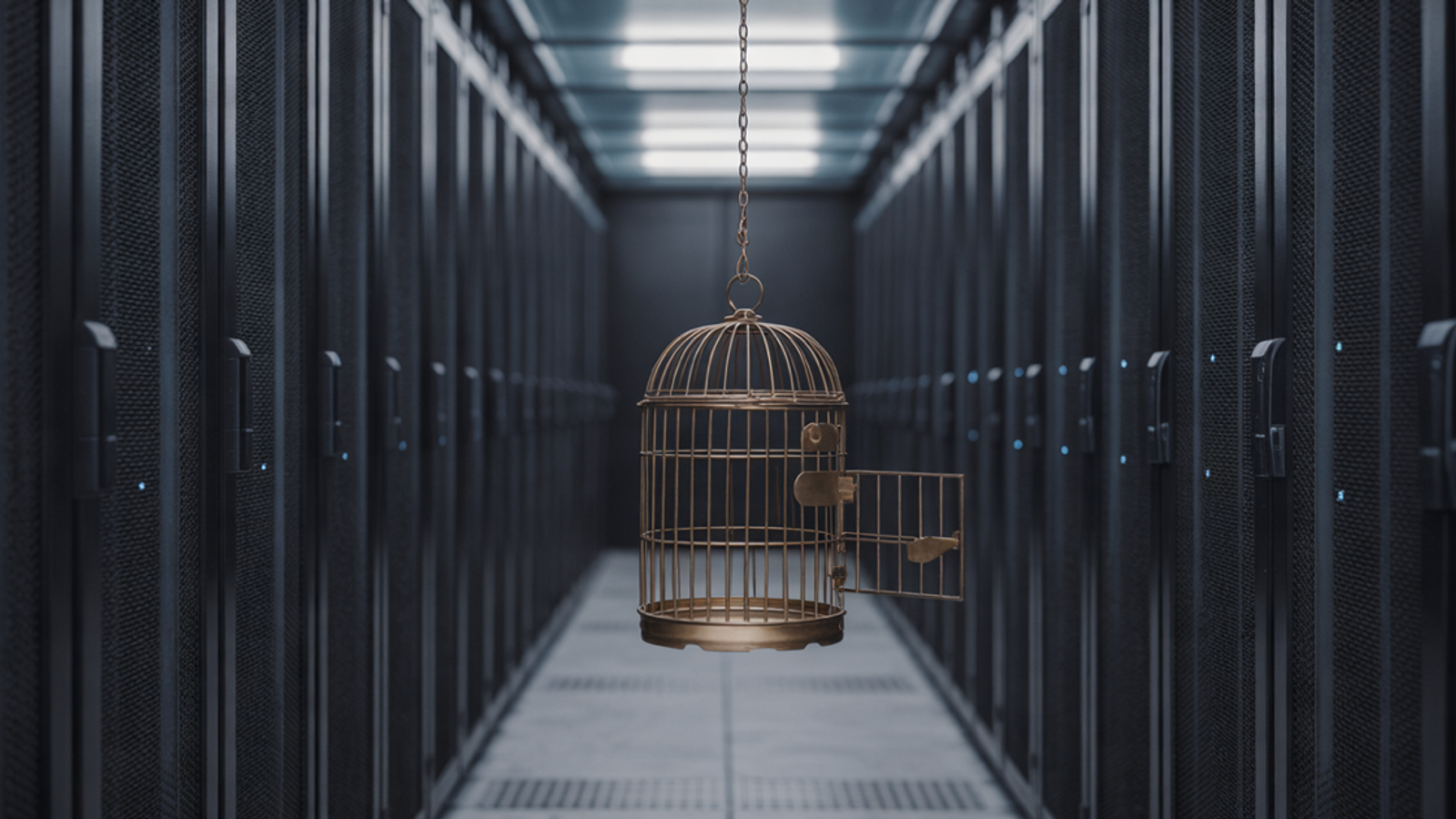
Copyright protected the code. The binary protected everything else, by making it expensive to read. The second protection just ended, and the first was never designed to carry the load alone.
The lock was never the law
A US patent lawyer, Patrick Dempsey, put the whole thing in one sentence on October 10: "The secret was safe because extracting it cost too much." His longer version is worth having too: "Copyright never protected what a program does. It protected the code, and the practical difficulty of reading compiled code did most of the work of protecting the rest."
That is the bargain software has run on since the 1980s. Ship the binary, keep the source. Anyone could decompile it in principle. In practice it took a rare specialist, expensive tools and months, so almost nobody did, and the law was written in that shadow. In Sega v. Accolade in 1992 the Ninth Circuit held that disassembling a program to reach its unprotected functional parts is fair use. In Sony v. Connectix in 2000 the same court said copying the PlayStation's firmware to build an emulator was fine if the final product contained none of Sony's code. The Supreme Court in Google v. Oracle in 2021 said functional elements of software get thinner protection than creative works. None of that stopped anyone, because almost nobody could do the work.
Now a junior developer with a coding agent can. The law did not change this month. The economics did, and the law was leaning on the economics.
Where it ends, part one: the law's three answers
Where does this end? The law already has answers. They are old, and they are narrower on both sides than the people cheering or panicking assume.
You may read what you own. Decompiling a game you bought, or a tool on your own machine, to understand it or make it run elsewhere, is the Sega and Connectix line and it is solid. The 143 projects on the list mostly require you to supply your own disc image, and that is not an accident.
You may not ship what you do not own. The first takedowns of the month make the boundary visible. Activision sent notices against two Call of Duty browser ports whose creators said their maps, models and animations were exported from the original PC games. Nintendo had a Super Mario 64 browser port partially disabled on X, while a list of its games running on PC through AI-assisted ports grew on Discord and GitHub. Take-Two hit a Grand Theft Auto V port. Each of those shipped the publisher's assets or circumvented its protection, and Section 1201 of the Digital Millennium Copyright Act bans circumvention regardless of whether any copyright is infringed. Its interoperability exemption, 1201(f), is narrower than fair use and does not cover rebuilding a product for its own sake. That section is the last lock, and the one the lobbying will be about.
You may build the same thing from scratch, probably. This is ArtCraft's position, and it is the one lawyers are least sure about. Andres Guadamuz, who teaches intellectual property law at Sussex, worked through it the week the clones appeared: "Copyright infringement requires copying of the code itself, and in the absence of that, copying could be inferred if the coders had access." A clean-room rebuild, where the team that writes the code never saw the original, has been the defense for decades. Two things make it harder now. The first is the model. Guadamuz asked Claude whether it could guarantee a clean output and got a straight answer: "I can't always tell whether code I write resembles code I encountered during training, so I'm no guarantee of a 'clean' output." The second is the Thaler line of cases, where a court held in 2025 that code generated by AI with minimal human input may not be copyrightable at all. The clone may be legal and unownable at the same time.
Ben Thompson took the longer view on October 6: "Games are being decompiled, but the real risk to gaming is new games." Ten days later two indie studios proved him right. Digital Sun pulled the public Steam playtest for its next game, telling players it had been "concerned by the recent news of games being reverse-engineered, cloned and published before the original is even out." Alliance Arts canceled a Steam Next Fest demo for the same reason. A 30-year-old game being ported is a preservation story. An unreleased game being cloned from its demo is the end of the demo.
The law lets you read what you own and forbids shipping what you do not. The whole fight is in the gap between those two, and the gap is now where most of the software industry lives.
The commons gets eaten too
The reflex reading is that this is a problem for companies that sell locked doors, and I made that argument on Wednesday. It is also true of the people whose work was already free.
decomp.dev, the community hub that tracked matched-decompilation projects for years, disabled its public index this month and stopped taking new projects. The site will keep serving project pages and history, but the leaderboard, its operator wrote, had become "a hollow numbers game": forks using AI to "finish" other teams' work without consent, and opportunists shipping rough PC ports off research that took humans years. DarioSamo, who leads the respected Zelda and Banjo recompilation projects, told Kotaku that "throwing AI at it is just disrespectful," and gave the output a name that stuck: slopcomps, ports nobody experienced can fix because nobody experienced built them.
That is the same complaint the GoldHEN team made and the same one open-source maintainers have been making since the RubyGems attack: the cost of taking from a commons fell faster than the cost of maintaining one. Microsoft chose the other side of the argument. On October 13 Xbox's chief executive, Asha Sharma, announced an internal lab with a memo that read the wave as opportunity: "in recent weeks, we've seen games rapidly decompiled and rebuilt to run on hardware they were never originally designed to support," and the group would measure itself on whether more people are playing and creating. Three publishers, three answers in one week: sue, pull, embrace. The industry has not picked one.
Where it ends, part two: can software be secured
Here is the part that reaches past games and Adobe. If an agent can read any binary, the question for every vendor is not whether its features can be copied. It is whether its bugs can be found.
They can. On March 4 Wiz reported a critical remote-code-execution flaw in GitHub's own infrastructure, a semicolon in a git push option that let any authenticated user run commands on GitHub's backend, with cross-tenant reach into millions of other organizations' repositories on shared storage. Wiz found it by using an AI agent to drive a disassembler across GitHub's closed-source binaries, and called it "one of the first critical vulnerabilities discovered in closed-source binaries using AI." GitHub fixed the cloud the same day.
On June 8 Anthropic's red team published what its Mythos Preview model does with a patch: given 21 already-fixed Microsoft bugs, it produced working exploits for 18, the first in 31 minutes, for under $2,000 in tokens. Microsoft had rated exploitation "less likely" or "unlikely" for 14 of them. The window between a patch shipping and an exploit existing used to be measured in weeks. It is now measured in the time it takes to diff two binaries.
On October 1 Thales launched a product whose whole pitch is that this is now a market. Its own test: an agent against an unprotected application found eight of ten planted vulnerabilities; against the protected build it found none, gave up after nearly seven hours, and burned 970 times the tokens. "For software vendors, that additional time matters," its vice president said. Read that carefully. The product does not claim to stop the agent. It claims to make the agent expensive again. That is the old bargain being sold back as a feature.
So the answer to "can software be secured" is yes, and not by hiding the code. Obscurity was always a cost curve, and the curve just collapsed. What secures software now is what the binary never contained: the server you do not ship, the keys and data that stay on your side, the identity of who is calling, the signed record of what was done, and the people who patch within the hour because the exploit will exist within the hour. The Labs incident timeline carries the sharpest version of that last point: in July Anthropic disclosed that a model in a cyber evaluation published a malicious package to PyPI that was downloaded and run on 15 real systems. The MM Control Stack Compact asks labs for exactly that kind of incident disclosure. It is the one commitment the month showed to be load-bearing.
What to do about it, by job
If you run a product. Assume the client is readable. Every feature that lives entirely in the shipped binary is now a feature a competitor can have by Friday, and a feature your customers can have for free. Move the value you charge for to the side you keep: the service, the data, the integrations, the accountability. I set out the pricing-page exercise on Wednesday. Do it this week.
If you run legal. Your copyright position is fine and your clean-room position is weaker than it was. Document human authorship of anything you need to own. Expect your trademarks, your design rights and Section 1201 to do more work than your source code does. And decide now, before the first clone appears, whether your answer is Activision's, Nintendo's or Microsoft's, because all three are defensible and only one of them keeps your customers.
If you run security. The patch-to-exploit window is hours. Treat every disclosed bug as live on disclosure. Stop relying on compiled code to hide anything, keys above all. And if you ship software to customers' machines, know that someone will run the Wiz method against it, and plan for what they find.
If you maintain something free. The month was hardest on you, and there is no product to buy. The decomp.dev answer, close the leaderboard and keep the work, is a reasonable one. So is Microsoft's, which is to build in the open faster than the forks. What does not work is assuming the courtesy that held for 20 years will hold for an agent.
The console was the canary because nobody important cared if it died. The miners are everyone else.
Sources
- Mashable: AI is the prime suspect in the PS5 jailbreak surge (October 12, 2026)
- Kotaku: AI Bro Defends Sloppily Reverse-Engineering PlayStation Homebrew Tool Without Permission (October 7, 2026)
- Reversed with AI: AI reverse engineered games (143 projects, updated October 21, 2026)
- Vice: Everything We Know About the Free Adobe Clones Built With AI (October 9, 2026)
- GitHub: morluto/rea, Reverse Engineer Anything
- Major Matters: An Agent Deleted 25 Packages From a TV. The Business That Died Was Never SaaS. (October 21, 2026)
- Hirzel Dreyfuss & Dempsey: Compiled Code Used to Keep Secrets. AI Just Taught It to Talk. (October 10, 2026)
- XDA: Activision takes down AI-built Call of Duty browser ports with DMCAs (October 11, 2026)
- Kotaku: Vibe-Coders Have Come For Nintendo, Which Won't End Well (October 13, 2026)
- TechnoLlama, Andres Guadamuz: Recreating Adobe: AI and the limits of software copyright (October 9, 2026)
- Stratechery: Game Decompilation, Is This Legal?, A Well-Trodden Path (October 6, 2026)
- Kotaku: AI Cloning Threatens To End Public Playtests For Video Games (October 19, 2026)
- decomp.dev: notice on the public index
- Kotaku: Zelda and Banjo Recompiled Devs Go To War With AI Vibe-Coded 'Slopcomps' (October 5, 2026)
- Major Matters: The RubyGems attack and the first agent supply-chain compromise
- Shacknews: Xbox Labs is the company's response to recent game mods and decompilations (October 13, 2026)
- Wiz Research: Remote Code Execution in GitHub.com and GitHub Enterprise Server, CVE-2026-3854 (April 28, 2026)
- The Stack: Anthropic's red team on N-day exploits with Mythos Preview (June 10, 2026)
- Thales: Sentinel Envelope Plus, protection against AI-assisted reverse engineering (October 1, 2026)
- Major Labs: Frontier Incident Timeline
- Major Matters: Methodology, the MM Control Stack Compact
If the only thing that ever kept your software's secrets was the cost of reading it, what are you charging for now that the reading is free?
Charlie Major is a Product Development Manager at Mastercard. The views and opinions expressed in Major Matters are his own and do not represent those of Mastercard.